
Canva updates its AI assistant for design automation
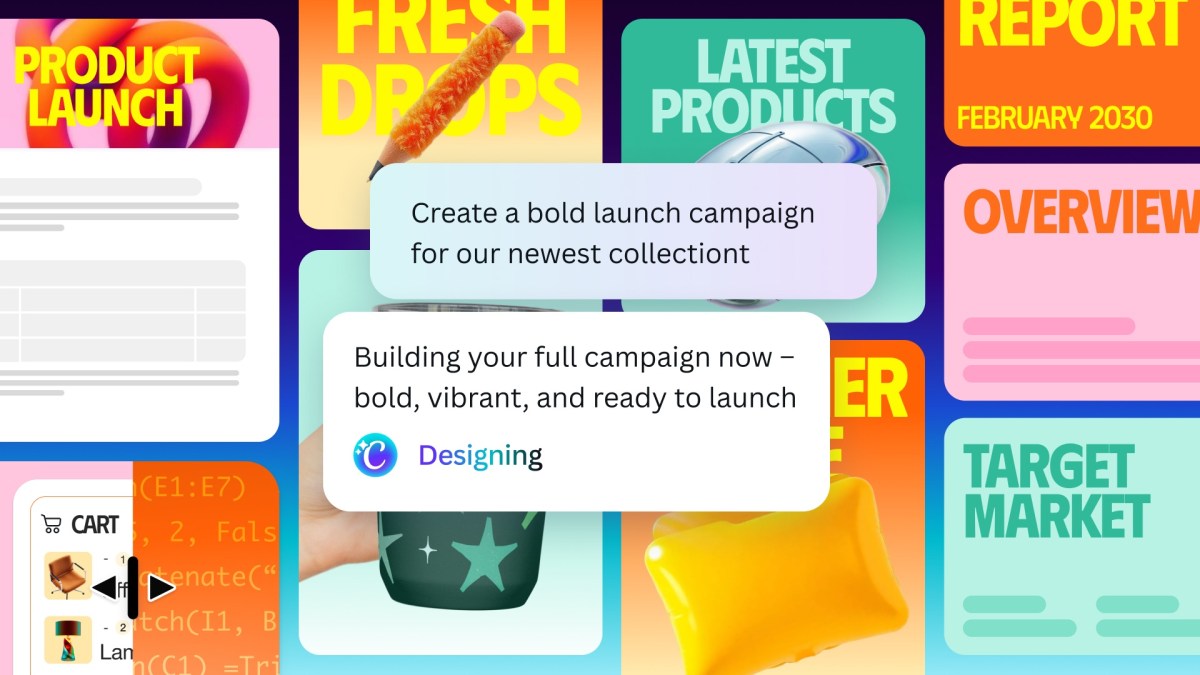
The new AI platforms promise users the ability to describe tasks, allowing the assistant to plan their execution and use necessary tools while keeping preferences in mind for future tasks. This is particularly important for design professionals who require a predictable and automated workflow for creating content and media assets. Canva is actively developing this concept in the latest version of its AI assistant, which allows users to create editable designs using text prompts.
Users can describe what they want to create, and the bot will call the necessary tools, providing several options. The assistant uses layers to create designs, giving users the flexibility to tweak various aspects of the final product as they see fit. This update comes as Canva strives to make its AI assistant a central element of users' workflows, adding features like image generation and website creation.
Canva's competitors are also working towards a similar goal. This week, Adobe launched the Firefly AI assistant, which can leverage the company's various apps to perform tasks, while Figma integrated support for AI agents into its platforms last month with an MCP server. Canva's co-founder and COO, Cliff Obrecht, noted that while many companies are trying to merge workflows, businesses prefer to execute the final steps of editing and publishing on Canva.
Obrecht stated, “I think a lot of small businesses start and end their day, and they’ll do a lot of their workflows completely in Canva.” He added that the company, recently valued at $42 billion, is likely to go public next year.
As part of this update, Canva is also adding integrations with services like Slack, Gmail, Google Drive, Calendar, and Zoom, allowing users to permit the AI bot to build context by reading emails, conversations, files, and meeting data. The company is introducing a web research skill, enabling the AI bot to browse the internet and perform tasks on behalf of users. A scheduling feature is also added, allowing users to instruct the AI bot to schedule repeatable tasks to run in the background, though this feature will only create a draft for review and posting.
Canva is refining its existing AI tools as well. Its AI code generator can now import HTML, and users can use text prompts to describe the types of spreadsheets they want to generate. The company claims to have improved the efficiency of its AI models, asserting that its Lucid Origin image-generation model is now 5 times faster and 30 times cheaper, while its 12V image-to-video model is 7 times faster and 17 times cheaper. Canva AI 2.0 is launching in research preview this week, and the company plans to make it available to all users in the coming weeks.
memweave: A New Approach to Agent Memory with Markdown and SQLite
Runway CEO suggests using one film's budget to create 50 movies
Related articles
Building Vision AI Pipelines Using DeepStream Coding Agents
NVIDIA DeepStream 9 simplifies the creation of vision AI applications.

Challenges of Deploying Machine Learning in Real-World Settings
Exploring the challenges of deploying machine learning in production and the importance of monitoring.
Introduction to Genetic Algorithms: Key Components and Structure
Overview of the key components of genetic algorithms and their applications.