
Overcome the 'Token Tax' with Google Gemma 4 and NVIDIA
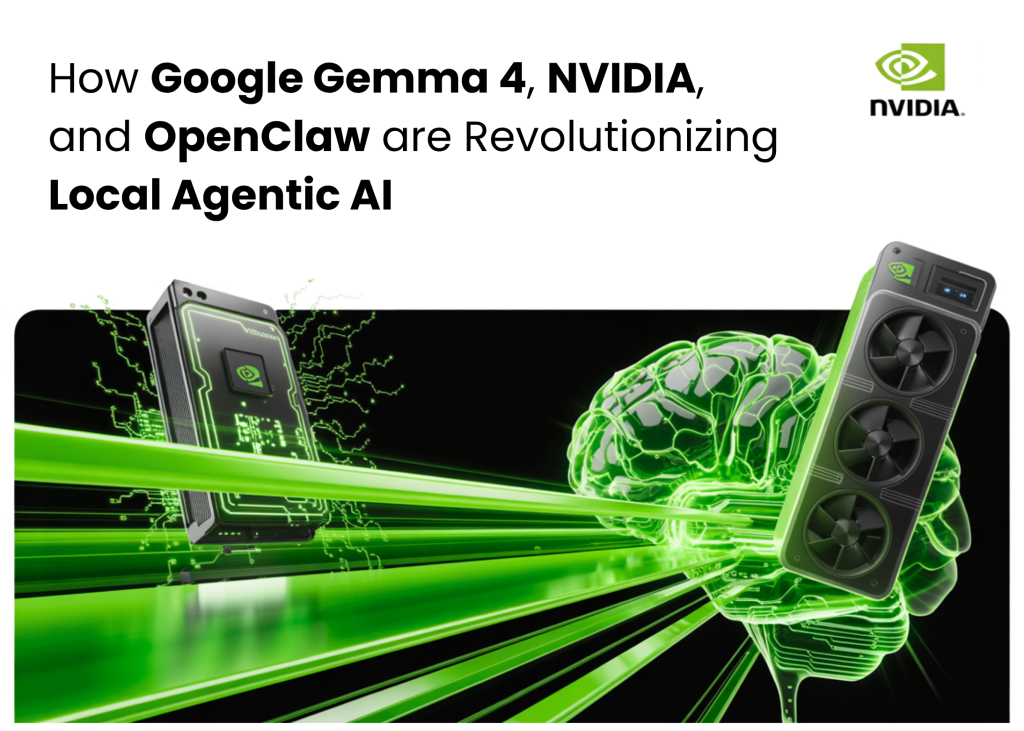
Google's latest omni-capable open models can be run faster on NVIDIA RTX AI PCs, including NVIDIA Jetson Orin Nano and the new DGX Spark systems. This allows for the creation of personalized, always-on AI assistants like OpenClaw without incurring massive costs for every token. The landscape of modern AI is rapidly changing, moving away from total reliance on cloud models to local, agentic AI powered by platforms like OpenClaw.
The potential for generative AI on local hardware is boundless, whether deploying a vision-enabled assistant on an edge device or building an always-on agent to automate complex coding workflows. However, developers face a persistent challenge: the 'Token Tax.' How can you get an AI to rapidly and reliably process multimodal inputs without racking up astronomical cloud computing bills for every token generated?
The answer to eliminating API costs lies in the new Google Gemma 4 family, with NVIDIA GPUs being the optimal hardware platform of choice. The latest additions to the Gemma 4 family introduce a class of small, fast, and omni-capable models specifically designed for efficient local execution across a wide range of devices. Optimized in collaboration with NVIDIA, these models scale effortlessly from Jetson Orin Nano edge AI modules to GeForce RTX PCs and DGX Spark workstations.
Think of the Gemma 4 family as a high-performance engine for your local AI agents. Spanning E2B, E4B, 26B, and 31B variants, these models are designed for efficient deployment anywhere. They natively support structured tool use and offer interleaved multimodal inputs, allowing developers to mix text and images in any order within a single prompt.
The combination of Gemma 4 and NVIDIA is winning the local AI race due to speed and economics. Applications like OpenClaw enable always-on AI assistants on RTX PCs and DGX Spark systems. The latest Gemma 4 models are fully compatible with OpenClaw, allowing users to build capable local agents that continuously draw context from personal files and automate daily tasks. Running locally is not just a technical preference; it is an economic necessity.
Related articles

The Issue with AI Memory: Limitations of Traditional Systems
The challenges of traditional memory systems in AI and the need for improvement.
MiniMax Open Sources MiniMax M2.7 Model with High Performance Metrics
MiniMax opens the source code of MiniMax M2.7, showcasing high performance in programming and office tasks.
Liquid AI Releases LFM2.5-VL-450M: a Vision-Language Model with Multilingual Support
Liquid AI has introduced LFM2.5-VL-450M, a vision-language model with multilingual support and bounding box prediction.