Understanding MCP (Model Context Protocol) for AI Tools
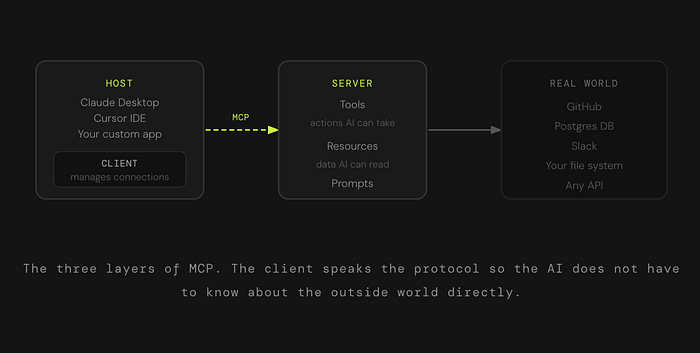
MCP (Model Context Protocol) is a new concept that changes the approach to integrating AI tools. Previously, creating an AI assistant for a business required developing custom integrations for each tool, leading to numerous issues.
The Problem Before MCP
Each tool, such as databases or messengers, required a separate connection. This resulted in the need to maintain multiple integrations, which was inefficient and costly.
What is MCP?
MCP, released by Anthropic in November 2024, is an open standard that allows AI models to interact with various tools through a single connection point. It can be compared to USB-C, which standardized chargers for different devices.
How It Works
MCP consists of three main components:
- Host: the application the user is interacting with.
- Client: manages the protocol and sends requests.
- Server: an interface that translates MCP requests into a format understood by specific tools.
Benefits of MCP
With MCP, AI can automatically discover and utilize new server capabilities without the need for manual code updates. This greatly simplifies the work for developers and data scientists.
Why MCP Became the Standard?
The rapid adoption of MCP occurred due to the availability of working implementations and SDKs from the start. This allowed major players like OpenAI and Google DeepMind to quickly integrate MCP into their systems.
Похожие статьи
Launch Canvas in AI Mode for New Projects
Canvas in AI Mode is now available for everyone in the U.S., simplifying project creation.
Expanding Personal Intelligence Capabilities for Users
Personal Intelligence is expanding in the U.S., offering personalized recommendations and assistance in search.

Google Launches Free AI Training for Massachusetts Residents
Google launches free AI training for Massachusetts residents through the Grow with Google program.