
Optimize AI Agents for Successful Production
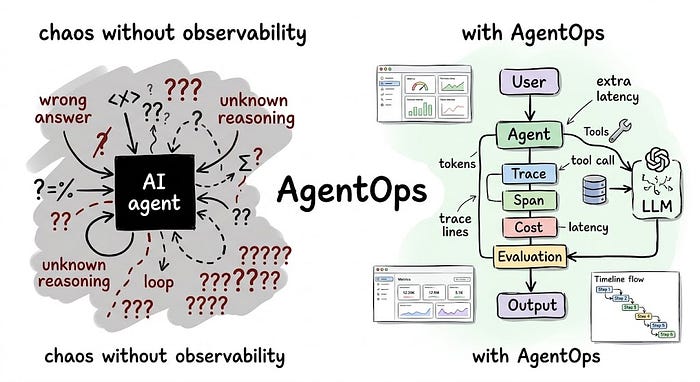
Implementing AI agents into production processes has become a crucial step for many companies. However, despite successful testing in staging environments, many of these agents face significant challenges in real-world operations. Traditional monitoring systems often fall short in detecting the subtle failures that can occur during the operation of AI agents.
The article emphasizes the necessity of adopting AgentOps—a discipline aimed at managing the lifecycle of AI agents. It outlines five critical functions that enhance observability, control costs, evaluate performance, and ensure compliance in real-world applications. This is especially relevant in situations where errors can lead to substantial financial losses.
By providing practical examples and potential pitfalls, the authors argue for the importance of implementing robust observability measures before deploying AI agents. This proactive approach can help avoid costly mistakes and maintain accountability for AI systems' actions.
In conclusion, for AI agents to function successfully in production, it's essential to consider not only their initial development but also ongoing monitoring and optimization during operation. This will enable companies to effectively leverage technology while minimizing risks.
Exploring Anthropic's Code Leak: What They Were Hiding
Microsoft Unveils Three New AI Models to Compete
Похожие статьи

Explore DenseNet Architecture and Its Implementation in PyTorch
Explore DenseNet architecture and its implementation in PyTorch to tackle the vanishing gradient problem.
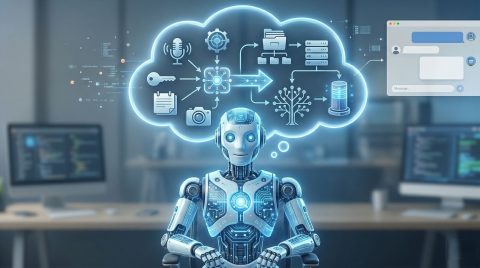
Replaced Vector DBs with Google's Memory Agent for Obsidian Notes
I replaced vector databases with Google's memory agent for Obsidian notes, enhancing memory management.
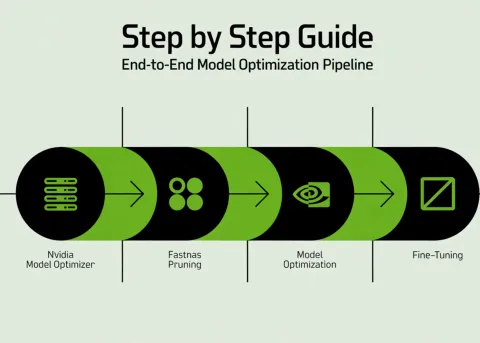
Build Model Optimization Pipeline with NVIDIA Model Optimizer
Learn how to create a model optimization pipeline with NVIDIA Model Optimizer.