
Anthropic releases Claude Opus 4.7, narrowly retaking lead in LLM

Anthropic has announced the release of its most powerful language model yet, Claude Opus 4.7, now available to the public. This model surpasses its closest competitors, such as OpenAI's GPT-5.4 and Google's Gemini 3.1 Pro, on key metrics including programming, tool usage, and financial analysis. However, the competition remains tight, as Opus 4.7 only slightly leads GPT-5.4 in comparable tests.
Currently, Opus 4.7 holds the market lead with an Elo score of 1753 in the GDPVal-AA test, significantly outperforming GPT-5.4 (1674) and Gemini 3.1 Pro (1314). Yet, the model does not claim an absolute victory across all categories, as its competitors still excel in specific areas such as agentic search and multilingual Q&A.
Claude Opus 4.7 is available on all major cloud platforms, including Amazon Bedrock and Google Cloud, with API pricing steady at $5/$25 per million tokens. The model represents an evolution of the Opus 4.6 architecture, with enhancements in software engineering and complex document processing.
One significant upgrade is the introduction of high-resolution multimodal support, allowing the model to process images up to 2576 pixels on their longest edge. This dramatically enhances its capabilities in tasks requiring high visual acuity.
However, Anthropic warns that the new model necessitates changes in how prompts are formulated. Opus 4.7 follows instructions literally, which may require retuning legacy prompt libraries to avoid unexpected results. Additionally, the new model tends to engage in deeper reasoning, which may increase token consumption and latency.
To manage token costs, the Claude API is introducing a new 'task budgets' feature, allowing developers to set limits on token expenditure for autonomous agents. These changes signal a maturing AI market where technologies require financial and operational oversight.
Gemini Enhances Personalized Image Creation Features
Google launches new AI Mode for side-by-side web searching
Related articles

OpenAI unveils GPT-Rosalind to accelerate life sciences research
OpenAI has introduced GPT-Rosalind, a model to accelerate life sciences research.
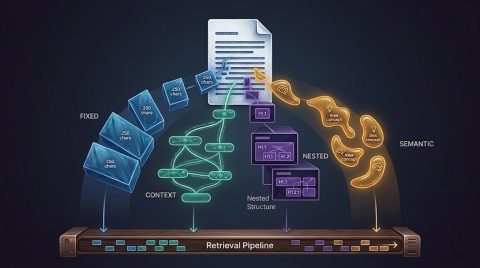
Error in RAG: How Incorrect Data Chunking Affects Outcomes
Incorrect data chunking can lead to system errors, reducing user trust.

Google launches new AI Mode for side-by-side web searching
Google has introduced a new AI Mode for side-by-side web searching.