
OpenAI unveils GPT-Rosalind to accelerate life sciences research

OpenAI has announced a new specialized model, GPT-Rosalind, designed to accelerate and optimize research in the life sciences. Named after the pioneering chemist Rosalind Franklin, whose work was crucial to the discovery of DNA's structure, GPT-Rosalind aims to serve as an intelligent assistant that helps researchers navigate the lengthy and complex workflows of scientific inquiry.
The model not only allows for faster text generation but also synthesizes evidence, generates biological hypotheses, and plans experiments. This significantly reduces the time required for tasks that previously demanded years of expertise and effort. Unlike earlier versions of GPT, which were geared toward general language tasks, GPT-Rosalind is optimized for deep understanding across genomics, protein engineering, and chemistry.
OpenAI tested the model against several industry benchmarks, and the results showed that GPT-Rosalind achieved leading positions among models with published scores. Notably, in tests on the LABBench2 platform, the model outperformed GPT-5.4 on six out of eleven tasks, with especially remarkable results in the CloningQA task related to designing reagents for molecular clones.
Additionally, OpenAI introduced a new plugin for Codex that integrates with the tools scientists already use. This plugin provides a unified starting point for multi-step questions, allowing researchers to automate repetitive tasks such as protein structure lookups and sequence manipulations.
However, given the power of the model, OpenAI has opted not to make it publicly available. Instead, it will be accessible through a Trusted Access program for qualified enterprise customers in the United States. This decision is based on principles of beneficial use, strong governance, and controlled access. Organizations seeking access must undergo a qualification and safety review to ensure they are conducting legitimate research with clear public benefit.
Initial partners from the pharmaceutical and technology sectors have responded positively to the announcement. For instance, representatives from Amgen noted that collaboration with OpenAI would help accelerate the delivery of medicines to patients. This also supports the technological infrastructure needed for laboratory research, translating scientific ideas into practical workflows.
OpenAI updates Codex to access all applications on your computer
OpenAI updates Codex to compete with Anthropic
Related articles
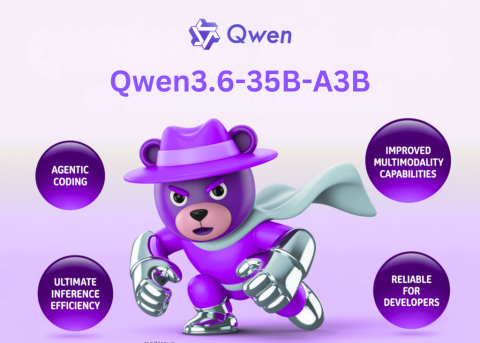
Qwen Team Introduces Qwen3.6-35B-A3B: A New Open AI Model
The Qwen team has introduced a new AI model, Qwen3.6-35B-A3B, with innovative capabilities.
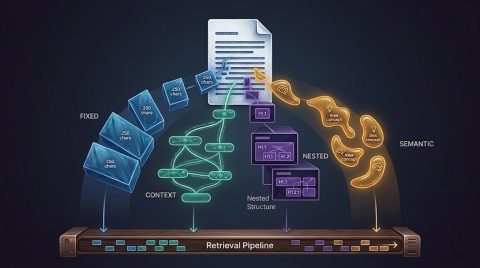
Error in RAG: How Incorrect Data Chunking Affects Outcomes
Incorrect data chunking can lead to system errors, reducing user trust.

Google launches new AI Mode for side-by-side web searching
Google has introduced a new AI Mode for side-by-side web searching.