
OpenAI updates Codex to compete with Anthropic
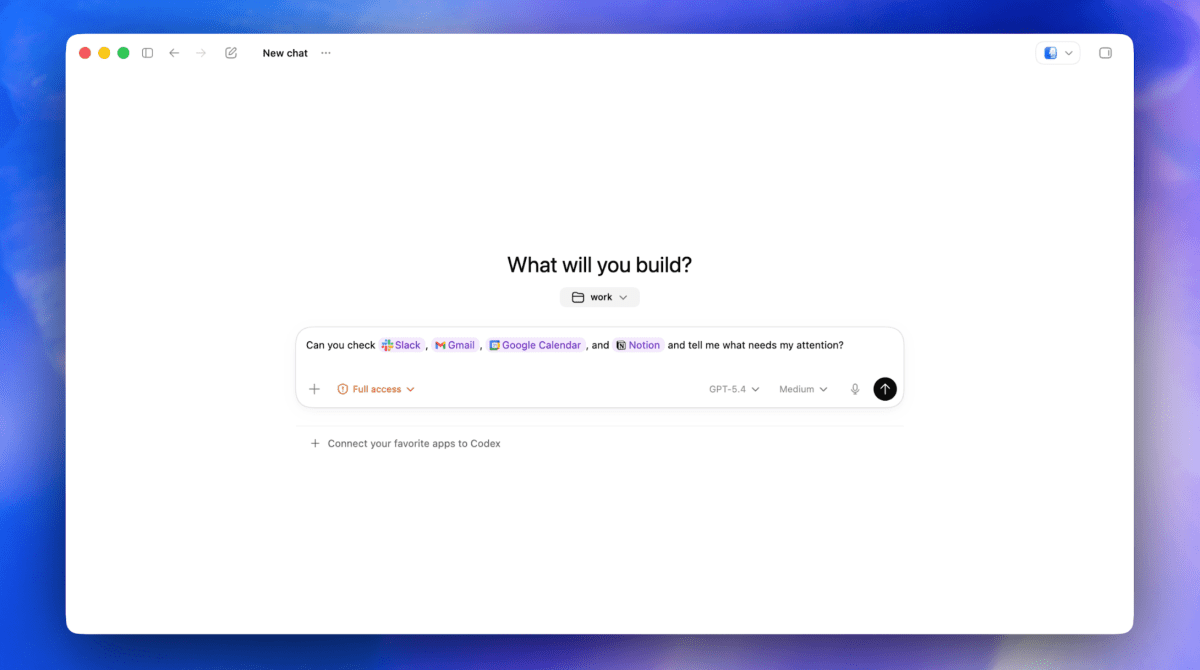
There is currently a competitive battle between OpenAI and Anthropic over the creation of the most convenient and powerful AI programming tools. Anthropic seems to be leading for now, as their tool Claude Code has become popular among many companies. However, OpenAI is not giving up and this week announced a revamp of its Codex tool, which includes a variety of new features significantly expanding its capabilities.
One of the most notable updates is that Codex can now operate in the background on your computer, opening any applications and performing operations with a cursor. This allows Codex to deploy multiple agents that work on a user's Mac in parallel without interfering with their work in other applications. Thus, Codex becomes a kind of assistant that performs auxiliary tasks while the user focuses on top-line projects.
OpenAI lists potential use cases for such agents, including iterating on frontend changes, testing applications, and working in apps that do not expose an API. This update demonstrates OpenAI's desire to make Codex a competitive coding assistant and a more multifaceted tool that can be integrated into various corporate workflows.
It is also worth noting that some of the powers OpenAI is adding to Codex resemble those previously released by Anthropic for Claude Code. Last month, Anthropic announced that Claude and Cowork could remotely control a user's Mac and desktop while they were away from the keyboard.
Additionally, Codex now features an in-app browser that allows users to issue commands to the tool, which it will then carry out on specific web applications. OpenAI claims this function will be useful for frontend and game development, and plans to eventually expand Codex's capabilities to fully command the browser.
A new feature called “memory” allows Codex to recall previous work sessions and generate important context about how a particular user works. The agent has also been given a new image-generation ability, which OpenAI states can be used to create product concepts, slide visuals, and other corporate paraphernalia.
Finally, to expand Codex's ability to get things done, the company announced 111 plugin integrations from apps like CodeRabbit and Gitlab Issues, allowing Codex to carry out tasks involving those tools. OpenAI frames these plugins as giving Codex the ability to perform minor clerical work, such as reviewing Slack channels and Google Calendar to provide a to-do list for a given day.
OpenAI unveils GPT-Rosalind to accelerate life sciences research
Physical Intelligence unveils a universal robot brain capable of learning
Related articles

Salesforce launches Headless 360 for AI agents
Salesforce has launched Headless 360, exposing all platform capabilities for AI agents.

OpenAI updates Codex to access all applications on your computer
OpenAI updates Codex, enabling access to all applications on your computer and new features.
Automated Reasoning checks in Amazon Bedrock ensure AI compliance
Automated Reasoning checks in Amazon Bedrock provide formal AI validation for compliance.