
Intel joins Elon Musk's Terafab chips project
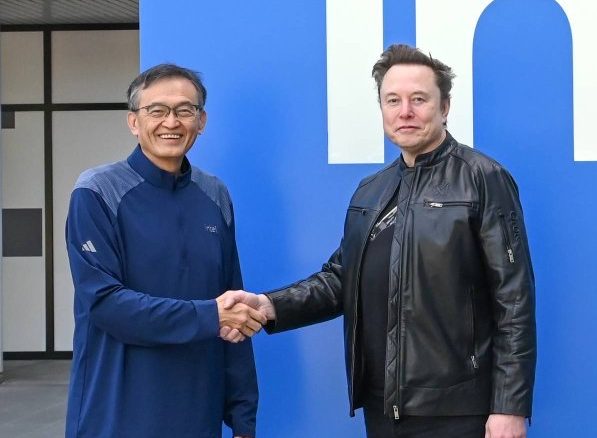
Intel has announced its intention to join the Terafab project initiated by Elon Musk, which includes SpaceX and Tesla. The goal of the project is to create a new semiconductor manufacturing facility in Texas, although the details of Intel's contributions remain unclear. In a corporate post on platform X, Intel stated that its ability to design, manufacture, and package high-performance chips at scale will help accelerate Terafab's goal of producing one terawatt of computing power per year to support future advancements in AI and robotics.
Elon Musk announced the collaboration between the two tech companies in March, stating that they would be developing chips for AI computing, as well as for satellites, including SpaceX's proposed space data center, and to support the potential for autonomous Tesla vehicles and robots. However, building a chip fab is considered one of the most challenging and expensive corporate infrastructure projects, typically requiring years and over $20 billion to create a facility with a massive clean room for thousands of ultra-precise machines to carve silicon.
It was not obvious how SpaceX and Tesla, companies without experience in this sector, could efficiently execute the project. Now, the situation is clearer: Intel will take on this task. The company has been actively seeking large anchor customers to support its foundry business, and now it has two such partners. Nevertheless, if investors thought that Terafab would be based on SpaceX and Tesla's unique engineering approach, that may not materialize. Once the leading U.S. silicon producer, Intel has seen rivals Nvidia and AMD take the lead in developing advanced processors and adopt the fabless business model, where chip designers outsource the manufacturing of their semiconductors.
In light of this news, Intel's stock rose more than 3%. As of 2 PM ET, it was trading at $52.28, about 2.9% higher than its opening price. Intel and SpaceX did not respond to requests for comment by press time.
Building a text-to-SQL solution using Amazon Bedrock
Firmus, the AI data center builder, achieves $5.5 billion valuation
Related articles
Five AI Compute Architectures Every Engineer Should Know
Explore five key compute architectures for AI that are crucial for engineers.

Google and Intel deepen AI infrastructure partnership
Google and Intel strengthen their collaboration in AI by expanding their partnership for processor and infrastructure development.
Efficient Management of AI Workloads on Supercomputers
Overview of managing AI workloads on NVIDIA supercomputers using Mission Control.