
Optimizing GPU Usage for Efficient Model Training
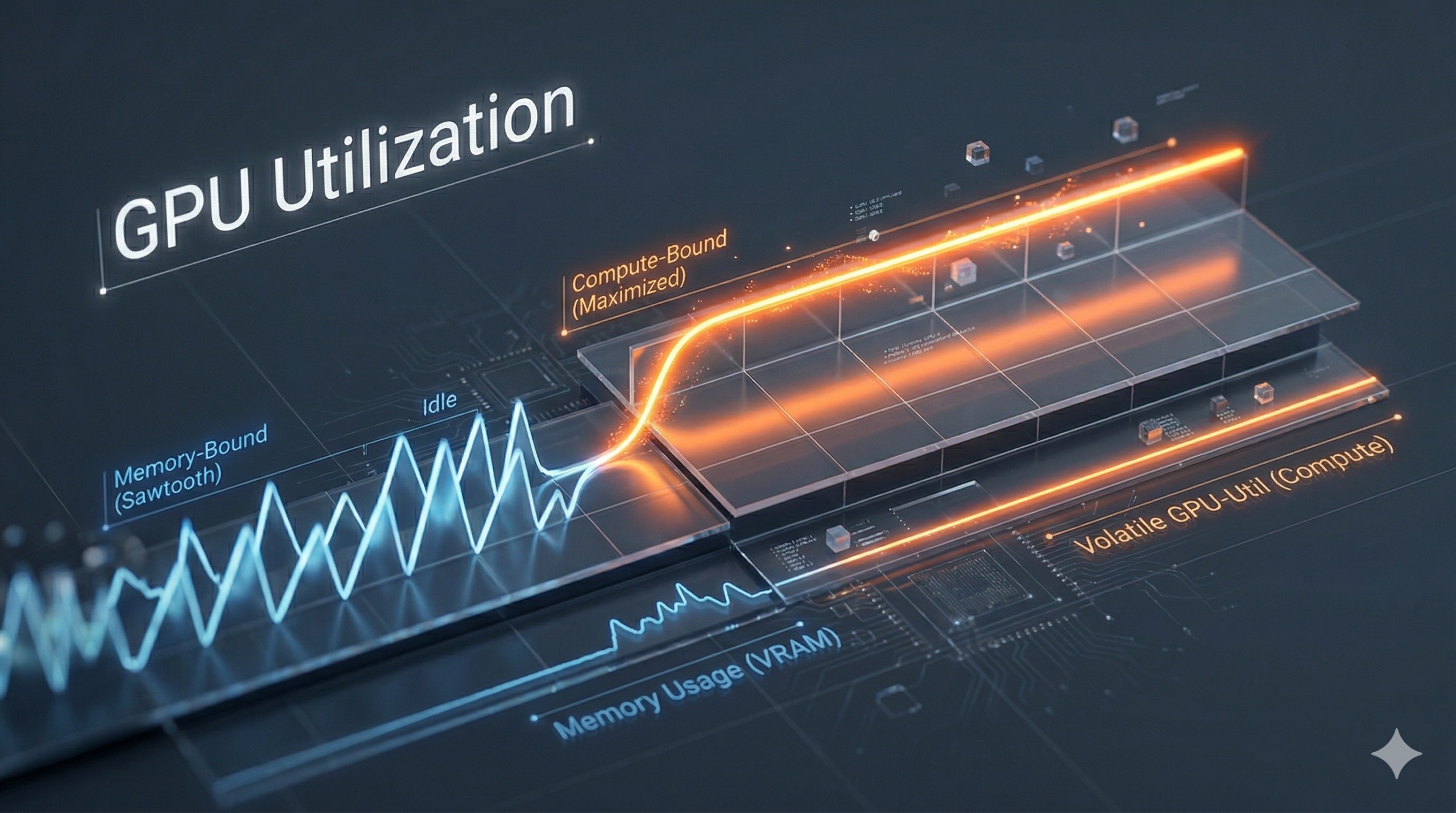
Modern artificial intelligence research demands powerful computational resources, presenting users with the challenge of optimizing graphics processing unit (GPU) performance. In an era of constrained compute, understanding GPU architecture, identifying bottlenecks, and finding solutions, from simple PyTorch commands to custom kernels, is essential.
When training models with billions of parameters and processing large datasets, maximizing GPU efficiency becomes critical. An unoptimized setup can turn a quick experiment into hours of waiting. Often, the slow performance is not due to model size but rather the central processing unit (CPU), which is responsible for loading and preprocessing data.
Modern GPUs can perform parallel computations at high speeds, but their efficiency depends on how the CPU delegates tasks and manages data transfer. If the CPU struggles to load data, the GPU will sit idle, waiting for information. Fortunately, improving this situation does not always require deep knowledge of GPU architecture or writing complex CUDA code.
This article explores the mechanics behind bottlenecks and provides practical recommendations for maximizing GPU utilization. We will cover fundamental PyTorch pipeline tweaks, more advanced hardware optimizations, and Hugging Face integrations.
Graphics processing units gained popularity due to their ability to quickly train and run models with parallel operations. However, it is crucial to understand that GPUs do not universally outperform CPUs, as the latter are designed to solve sequential problems with low latency.
Understanding metrics such as memory usage and volatile GPU utilization is key to optimizing performance. Improper data transfer between the CPU and GPU can lead to significant time losses, making it essential to optimize the size of data blocks being transferred.
In conclusion, achieving maximum GPU efficiency requires considering both architecture and CPU interaction, which can significantly reduce training time and enhance the overall performance of machine learning systems.
Autonomous underwater vehicles optimize diver operations
Google launches Gemini's Personal Intelligence feature in India
Related articles
NVIDIA NVbandwidth: Tool for Measuring GPU Performance
NVIDIA has launched NVbandwidth, a tool for assessing data transfer performance between GPUs.
Five AI Compute Architectures Every Engineer Should Know
Explore five key compute architectures for AI that are crucial for engineers.

Google and Intel deepen AI infrastructure partnership
Google and Intel strengthen their collaboration in AI by expanding their partnership for processor and infrastructure development.