
Optimize Explainable AI for Real-Time Fraud Detection

This article discusses a new neuro-symbolic approach to explainable artificial intelligence that significantly reduces explanation generation time for fraud detection. The study revealed that the new method provides a 33-fold reduction in latency compared to traditional methods like SHAP KernelExplainer, which takes about 30 milliseconds for prediction. The neuro-symbolic model generates explanations directly during the forward pass, taking only 0.9 milliseconds.
The author shares a personal experience debugging a fraud detection system when the need arose to understand why the model flagged a specific transaction. He encountered the issue that explanations generated using KernelExplainer were unreliable and time-consuming. This realization led to the development of a new approach that integrates explainability directly into the model architecture.
A key point is that explainability should not be a post-processing step but should be embedded within the model itself. This is particularly crucial in real-time settings where delays are unacceptable. Unlike SHAP, which requires a background dataset and can yield different results with each run, the new model provides deterministic and stable explanations.
Experiments were conducted on the Kaggle credit card fraud detection dataset, which includes over 284,000 transactions, with only 492 confirmed fraud cases, amounting to 0.1727% of the total transactions. To address class imbalance, the SMOTE method was used, achieving a more even distribution of data in the training set.
The neuro-symbolic model developed by the author consists of three components: a neural network, a symbolic rule layer, and a fusion layer that combines signals from both parts. This allows not only for making predictions but also for explaining them, effectively addressing the challenge of real-time fraud detection.
Exploring p-hacking: How statistics can deceive you
Understanding Language: How Embedding Models Organize Information
Related articles

OpenProtein.AI provides biologists with protein design tools
OpenProtein.AI offers biologists tools for effective protein design.
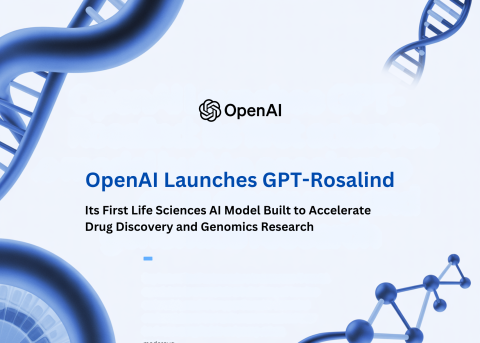
OpenAI Unveils GPT-Rosalind: New AI for Life Sciences Research
OpenAI has introduced GPT-Rosalind, a new AI model to accelerate drug discovery and genomics research.

UC Berkeley and UCSF Researchers Use AI to Transform Medical Imaging
Researchers from UC Berkeley and UCSF are developing AI to improve medical imaging.