
Understanding the Inversion Error in Safe AGI
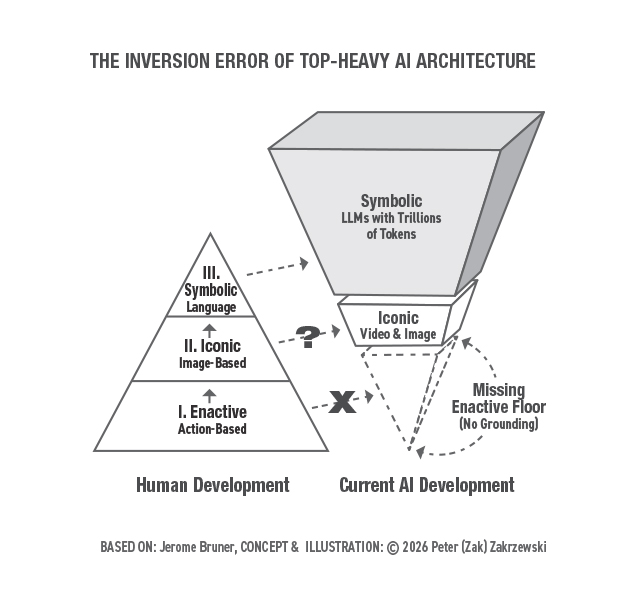
This article explores the Inversion Error that arises in artificial intelligence systems like Google Gemini. It examines how the lack of physical experience and interaction with reality leads to issues with understanding and logical reasoning. AI systems, despite their achievements, continue to face challenges in causal understanding and logical deduction, highlighting the need for a deeper analysis of their architecture.
Research conducted by the Google DeepMind team shows that even with high scores on tests like the Massive Multitask Language Understanding (MMLU), models are incapable of true understanding. They demonstrate fluency without grounding, which leads to the Inversion Error described in the article.
In the process of creating a physically grounded model such as Gemini Robotics 1.5, researchers encountered task generalization issues, confirming the existence of a structural gap in the system's architecture. Despite attempts to implement 'Embodied Thinking,' which allows models to generate language-based reasoning before taking action, the Inversion Error remains a pressing issue.
The article argues that addressing this problem requires a structural intervention rather than merely scaling up or applying symbolic reasoning to physical actions. It is crucial to understand that the Inversion Error arises from building the peak of synthetic cognition without the necessary base.
According to psychologist Jerome Bruner's theory, human cognitive development progresses through three stages: enactive, iconic, and symbolic. Each of these stages is dependent on the previous one, and removing the base leads to a system that cannot adequately verify its outputs.
Optimize UC Berkeley's Machine Learning Course for the AI Age
Salesforce unveils AI-enhanced Slack with 30 new features
Related articles

Google adds AI features to Chrome for saving workflows
Google adds a new Skills feature to Chrome for saving AI prompts.
Google launches Gemini's Personal Intelligence feature in India
Google launches Gemini's Personal Intelligence feature in India, allowing users to receive personalized answers.
NVIDIA and University of Maryland Unveil Audio Flamingo Next
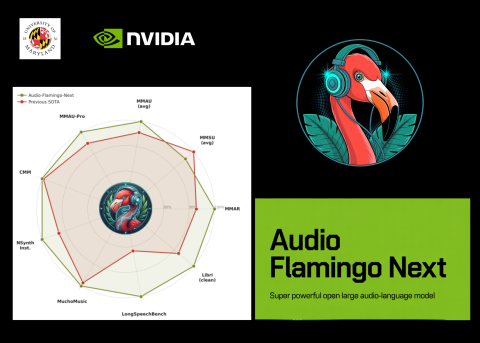
NVIDIA and University of Maryland unveiled Audio Flamingo Next, a powerful audio-language model for processing speech and sounds.