
AI Steering Committees' 2026 Checklist: Observability

Every organization aims for AI to progress faster and more intelligently. However, as they transition from conversational assistants to autonomous systems, enterprises are discovering that the main bottleneck is not technology, but the ability to ensure control. To maintain velocity and control in 2026, steering committees must address a fundamental question: Do we have line-of-sight and control over the deployed AI agents, knowing exactly what they are, what data they interact with, and what they are doing?
To assist leaders in navigating this complexity, we have refreshed our core framework: "Grow Your Business with AI You Can Trust." This guide serves as a practical roadmap for structured decision-making in security and governance, now introducing a critical new pillar for 2026: Observability.
As AI spreads across teams and tools, observability becomes a prerequisite for scaling. Without a centralized view, "shadow AI" and unmanaged agents can pose significant risks, from security vulnerabilities to sensitive data leaks. To achieve enterprise readiness, your AI steering committee should answer four foundational questions: Inventory of existing agents, identification of who is using these agents and for what purpose, access to systems and specific datasets, and the outcomes they are driving.
In our updated guide, we frame observability through four technical capabilities that every enterprise platform should support: a registry to track all AI assets, agent analytics providing real-time data on performance and costs, an agent map visualizing the connections between agents, users, and data, and role-specific dashboards for IT, security, and business leaders.
Accenture faced innovation stalls at the pilot stage due to fragmented tools slowing their path to production. By implementing a centralized platform with built-in observability, they unified monitoring across development and deployment. Accenture has already deployed over 75 use cases across industries, with 16 in production, reducing AI application build time by 50%.
Your AI steering committee can use the refreshed guide as a checklist to support a secure foundation for AI scaling: define trust, secure by design, govern the loop, achieve sustainability, and address digital sovereignty requirements. Ensure your platform supports the four capabilities for agent observability.
Artificial Intelligence Reduces Software Development Costs
Introduction to Genetic Algorithms: Key Components and Structure
Related articles

Salesforce launches Headless 360 for AI agents
Salesforce has launched Headless 360, exposing all platform capabilities for AI agents.
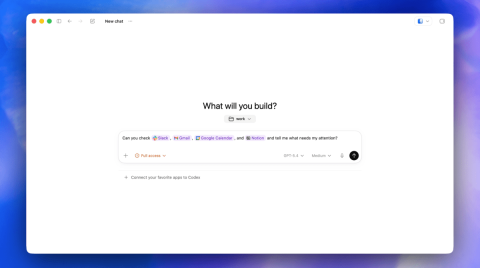
OpenAI updates Codex to compete with Anthropic
OpenAI has revamped Codex, adding new features to compete with Anthropic.

OpenAI updates Codex to access all applications on your computer
OpenAI updates Codex, enabling access to all applications on your computer and new features.