
Meta introduces Muse Spark, a new proprietary AI model
The open-source AI movement has always had numerous options. Models like Mistral, Falcon, and others with open weights have been available to developers for years. However, when Meta began promoting Llama, the landscape changed. A company with three billion users and vast computational resources was now building openly, and the developer community responded. By early 2026, the Llama ecosystem had reached 1.2 billion downloads, averaging about one million per day.
On April 8, 2026, Meta launched Muse Spark, its first major new AI model in a year and the first product from its newly formed Meta Superintelligence Labs. Muse Spark is capable in ways Llama 4 never was, benchmarks well against the current frontier, and is completely proprietary. There is no free download, and building on it is only permitted if Meta allows it.
The company spent $14.3 billion, brought in Alexandr Wang from Scale AI to lead its AI overhaul, and then spent nine months tearing down its entire AI stack. Muse Spark is the result of that effort. The developer community that made Llama successful is now being asked to wait for a future open-source version that may or may not arrive on a predictable timeline.
Muse Spark is a natively multimodal reasoning model with tool-use capabilities, visual chain of thought, and multi-agent orchestration built in. It now powers Meta AI, which reaches over three billion users across Meta’s apps. Meta rebuilt its technology infrastructure from scratch, allowing the company to create a model as capable as its older midsize Llama 4 variant at a fraction of the computational cost.
On benchmarks, Muse Spark scores 52 on the Artificial Intelligence Index v4.0, placing it fourth overall behind Gemini 3.1 Pro, GPT-5.4, and Claude Opus 4.6. However, Muse Spark excels in health-related queries, scoring 42.8 on HealthBench Hard, significantly ahead of competitors. Health is a stated priority for Meta, which claims to have collaborated with over 1,000 physicians to curate training data for the model.
Muse Spark also offers three interaction modes: Instant mode for quick answers, Thinking mode for multi-step reasoning tasks, and Contemplating mode, which orchestrates multiple agents’ reasoning in parallel. Unlike Meta’s previous models, Muse Spark is entirely proprietary. The company will offer the model in a private preview to select partners through an API, making it even more proprietary than paid models offered by its rivals.
The developer community's response has been skeptical. Some see this as a necessary pivot after Llama 4's failure to gain traction. Muse Spark will debut in the coming weeks inside Facebook, Instagram, WhatsApp, and Messenger, as well as in Meta’s Ray-Ban AI glasses. This rollout may prove more significant than any benchmark results. However, privacy concerns remain, as Muse Spark users will need to log in with an existing Meta account.
Google and Intel deepen AI infrastructure partnership
Companies like Apple are building AI agents with limits
Related articles
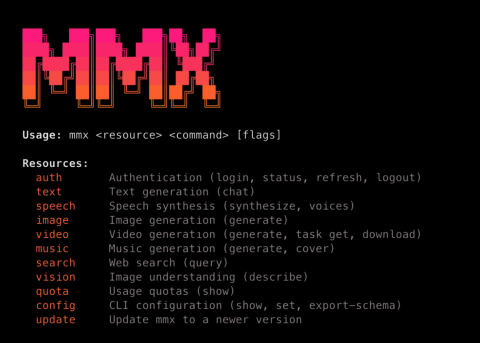
MiniMax Launches MMX-CLI: A Command-Line Interface for AI Agents
MiniMax has launched MMX-CLI, a new command-line interface for AI agents that simplifies access to generative capabilities.
Creating a Workflow for Microsoft VibeVoice with ASR and TTS
Exploring Microsoft VibeVoice: creating a workflow for ASR and TTS.

The Issue with AI Memory: Limitations of Traditional Systems
The challenges of traditional memory systems in AI and the need for improvement.