
MIT develops multitasking quantum sensors for simultaneous measurements
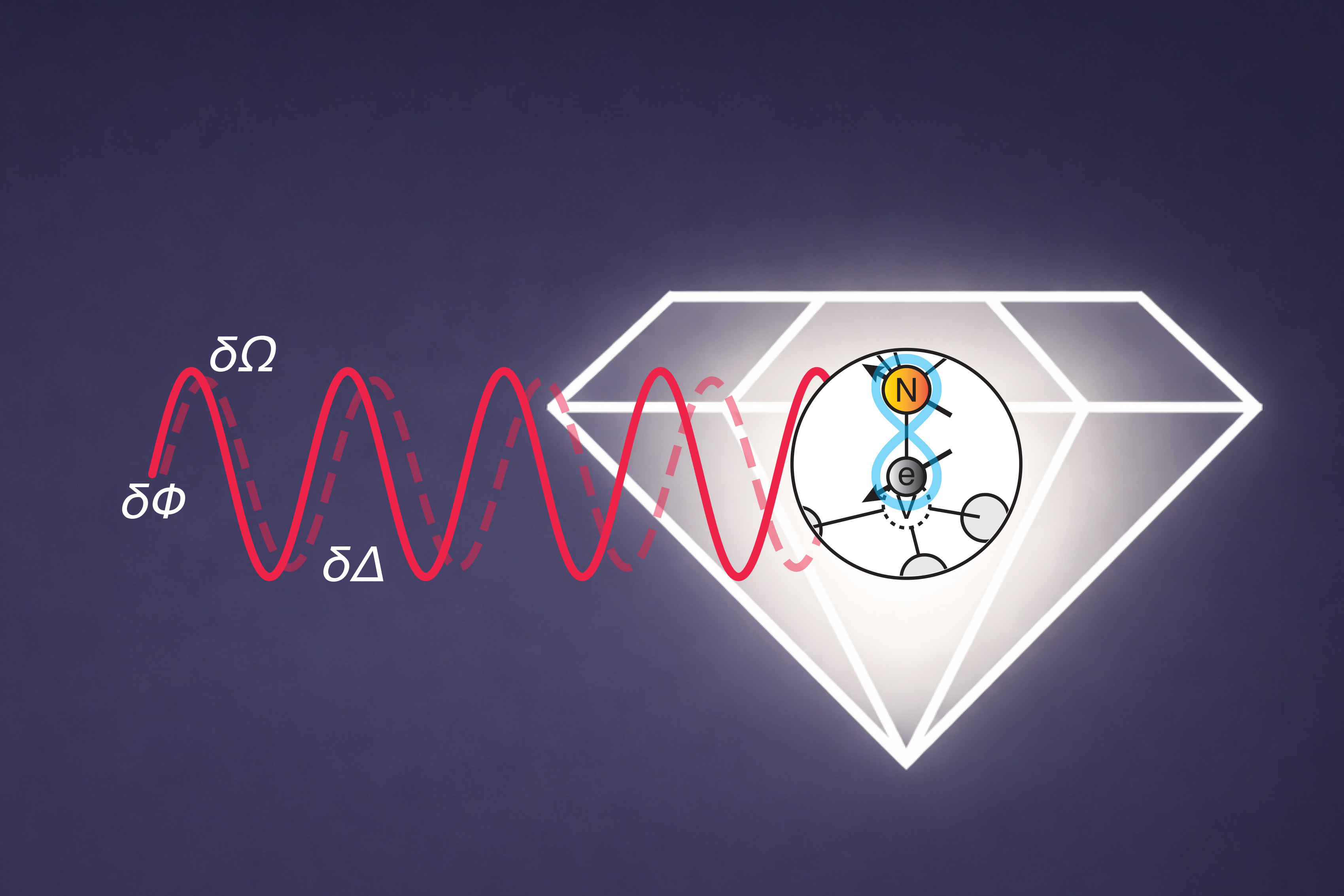
Researchers at MIT have created a method to simultaneously measure multiple physical quantities using a solid-state quantum sensor. These sensors leverage quantum properties to detect small signals that classical sensors cannot capture. Solid-state quantum sensors, particularly promising as they can operate at room temperature, traditionally measure only one quantity at a time, leading to signal mixing and unreliable measurements.
In a new paper, the MIT team demonstrated how to measure the amplitude, frequency, and phase of a microwave field simultaneously by exploiting particle entanglement. This advancement could enhance our understanding of atomic and electron behavior in materials and living systems like cancer cells. Co-author Takuya Isogawa noted that most experiments on multiparameter estimation have been theoretical until now.
Quantum sensors utilize effects like entanglement and spin states to measure changes in magnetic fields, electric fields, gravity, and acceleration. For instance, nitrogen-vacancy (NV) centers in diamonds are highly sensitive to external influences, making them valuable in biology and cosmology.
During the experiment, researchers used NV centers in a 5-square-millimeter diamond. They directed a laser into the diamond and studied its fluorescence for measurements. By employing a microwave antenna and a radio frequency field, the team was able to measure two spins simultaneously, increasing the number of extractable parameters.
The developed approach allows for simultaneous measurement of amplitude, detuning, and phase of a microwave magnetic field, which could also be applied to measure electric fields, temperature, and pressure. The researchers emphasize that this opens up new possibilities for exploring spin waves in materials, a significant topic in condensed matter physics.
Google launches 'Skills' in Chrome for managing AI prompts
US-China AI performance gap closes, but responsibility gap widens
Related articles
Building Neural Quantum States for Frustrated Spin Systems
Exploring neural quantum states for frustrated spin systems using transformers.
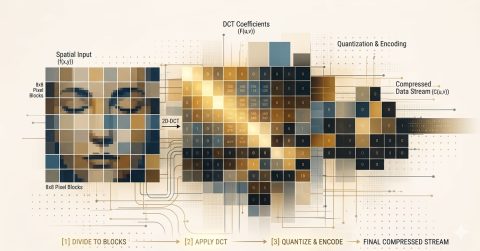
The Future of Data Compression: From Pixels to DNA
The future of data compression encompasses all types of information, from genomes to video, expanding the capabilities of digital technologies.

US-China AI performance gap closes, but responsibility gap widens
The Stanford University report indicates that while the US-China AI performance gap has closed, issues with responsibility and safety remain.