
MIT Engineers Create New Proteins Based on Their Motion
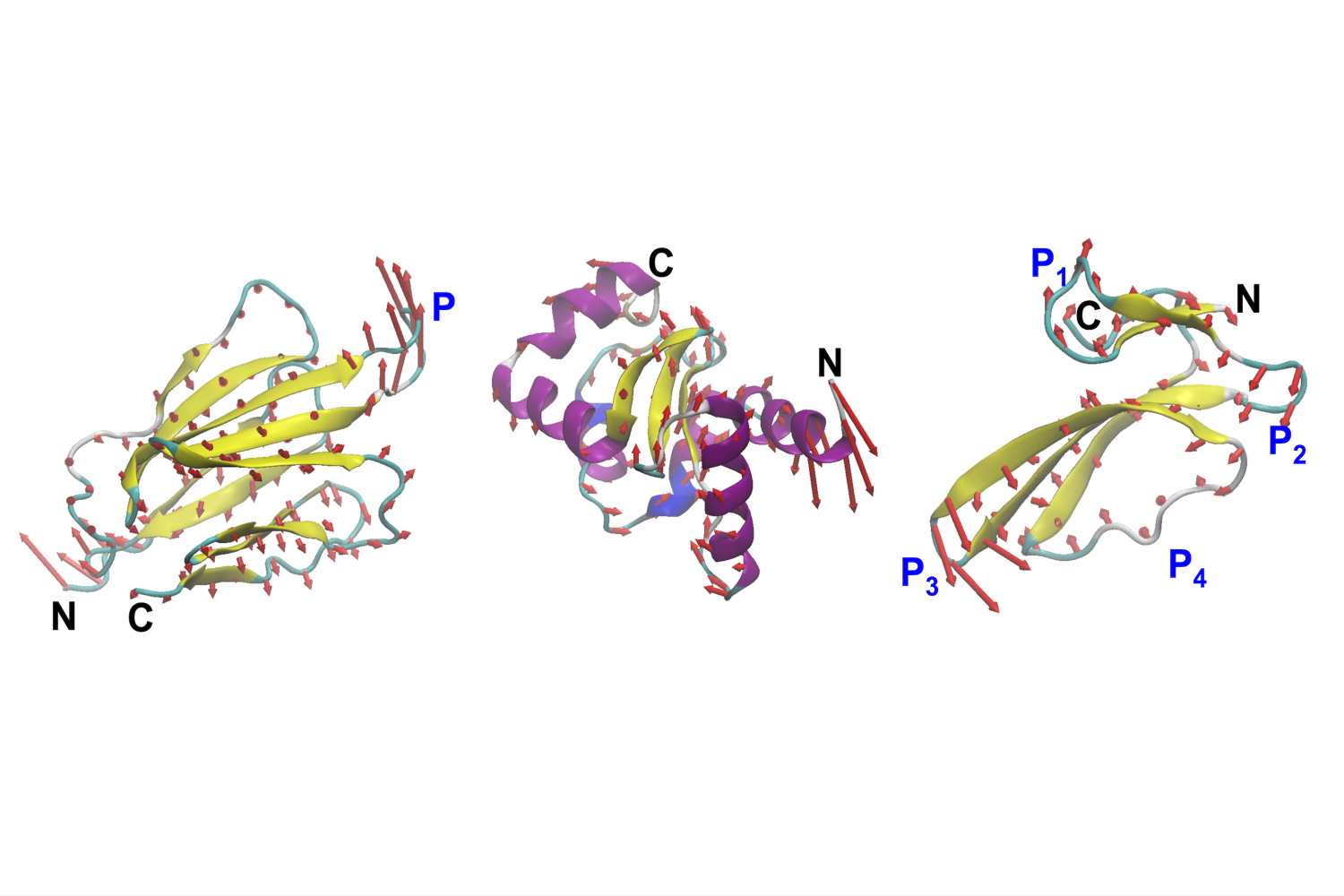
MIT engineers have developed an AI model that generates novel proteins based on their movement and vibration, opening new possibilities for dynamic biomaterials and adaptive therapeutics. This model, called VibeGen, allows scientists to target how a protein flexes, vibrates, and shifts shapes in response to its environment, marking a new frontier in molecular mechanics design.
Proteins play a crucial role in every cell of our bodies, performing numerous functions from pumping blood to fighting diseases. Their power lies not only in their shape but also in how they move. Artificial intelligence has already enabled scientists to create entirely new protein structures not found in nature, tailored for specific tasks. However, designing proteins solely based on shape is akin to designing a car body without considering how the engine performs.
The development of VibeGen represents a significant step toward bridging this gap. This model allows scientists to specify the desired dynamics—the pattern of motion they want—and then the AI creates a protein that meets these requirements. VibeGen builds on a series of advancements from the Buehler lab in agentic AI for science, where multiple AI models collaborate to solve complex problems.
Markus Buehler, a professor of engineering, emphasizes that the essence of life at the molecular level lies not just in structure but in movement. The new approach, described in a paper published on March 24 in the journal Matter, uses generative AI to create proteins with custom-tailored dynamics.
The revolution in AI-driven protein science has primarily focused on structure. However, VibeGen flips the traditional problem: instead of asking what shape a sequence will produce, it asks what sequence will make a protein move in exactly this way. To build VibeGen, the researchers turned to a class of AI diffusion models, which allows for the generation of amino acid sequences that are refined step by step until the desired dynamics are achieved.
The system operates through two cooperating agents: a “designer” that proposes candidate sequences and a “predictor” that evaluates them, checking whether they will move as intended. This iterative process allows for the stabilization of the design. VibeGen produces proteins that are entirely de novo, not borrowed from nature, and studies show they behave exactly as intended.
MIT and Hasso Plattner Institute Launch AI and Creativity Hub
Launch of Gemini 3.1 Flash Live: Google's New AI Audio Model
Related articles
The Future of Data Compression: From Pixels to DNA
The future of data compression encompasses all types of information, from genomes to video, expanding the capabilities of digital technologies.

US-China AI performance gap closes, but responsibility gap widens
The Stanford University report indicates that while the US-China AI performance gap has closed, issues with responsibility and safety remain.
MIT develops multitasking quantum sensors for simultaneous measurements
MIT researchers have developed quantum sensors capable of measuring multiple physical quantities simultaneously.